Not every roofing defect requires an emergency response. A cracked tile, small area of worn mortar or minor guttering problem may still need timely attention, but it may be possible to arrange a standard repair appointment. An emergency arises when the roof has suffered significant damage, water is entering rapidly or the condition presents an immediate risk to the property and its occupants.
Recognising the difference helps homeowners respond appropriately. If your roof in Chislehurst, Greater London, has suddenly deteriorated, a prompt professional assessment can establish whether immediate action is needed to make the property secure.
Warning Signs That May Require Emergency Roof Repairs
Roofing emergencies often follow strong winds, heavy rainfall, falling debris or the sudden failure of an already weakened component. However, serious problems can also develop gradually and only become noticeable once water begins entering the property.
Water Is Entering the Property Rapidly
A small damp mark should be investigated, but water actively dripping or running through a ceiling requires urgent attention. Significant water ingress may affect insulation, ceiling materials, timber and nearby fixtures.
The visible leak may not be directly below the roof defect. Water can travel along underlay, rafters and other surfaces before appearing inside. An emergency roofer should therefore trace the entry point rather than simply treating the internal symptom.
If water is close to electrical fittings, avoid the affected area and seek appropriate assistance. Do not enter a roof space where water is actively entering or materials appear unstable.
A Large Section of Roof Covering Is Missing
One displaced tile does not always constitute an emergency, although it should still be repaired promptly. The situation becomes more serious when a substantial group of tiles or slates has been removed, leaving the underlay or roof structure exposed.
A large opening allows rain to enter freely and may enable wind to get beneath neighbouring materials. This can cause further tiles or slates to loosen, increasing the extent of the damage.
Temporary weatherproofing may be needed before permanent repairs can be completed safely.
Roof Materials Are Falling or Hanging Loose
Loose tiles, sections of flashing, ridge materials or pieces of guttering can present an immediate concern when they are hanging above entrances, paths, driveways or gardens.
Keep people away from the affected area and do not attempt to retrieve or refit materials from the roof. Even a component that appears stable from ground level may move without warning, particularly during windy conditions.
A professional can assess the affected section and remove or secure loose materials before carrying out the necessary repair.
The Roof Structure Appears to Have Moved
A sudden sag, dip or change in the roofline can indicate movement within the supporting structure. Internal warning signs may include bowed ceilings, cracking sounds or visible movement in roof timbers.
Structural movement requires urgent assessment, especially if it follows an impact, prolonged water ingress or severe weather. Avoid entering the roof space or the room directly beneath an area that appears unstable.
The immediate priority is to establish the extent of the movement and prevent further damage.
A Tree or Heavy Object Has Struck the Roof
Impact damage can affect more than the visible roof covering. Tiles may break, battens can split, underlay may tear and structural timbers can be damaged.
Branches should not be pulled away without understanding how they are resting on the roof. Removing them incorrectly may cause further movement or enlarge an existing opening.
An emergency assessment can identify which parts of the roof have been affected and determine how to make the area secure.
Leadwork or Flashing Has Failed Around a Vulnerable Junction
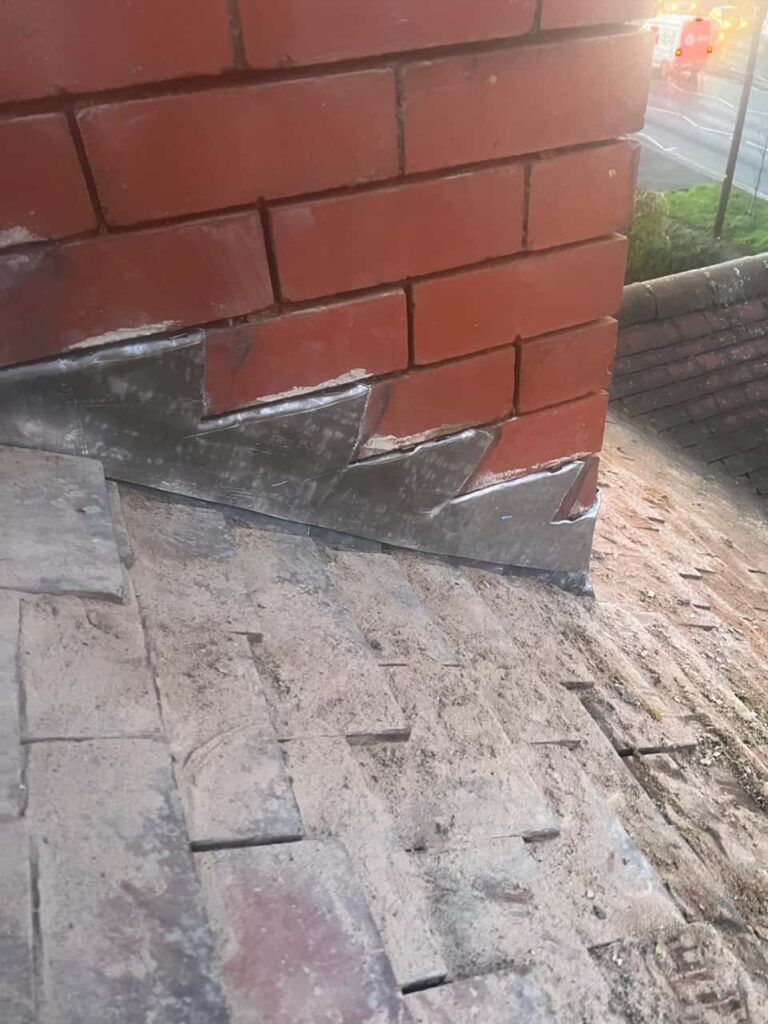
Lead flashing protects joints around chimneys, walls and other changes in the roof structure. If a substantial section lifts, tears or becomes detached, water may enter through the exposed junction.
Minor flashing deterioration can often be handled as a planned repair. Emergency attention may be appropriate when a large section has failed during bad weather or when significant water ingress is already occurring.
A Flat Roof Has Split or Partially Detached
Flat roofing systems can suffer tears, open seams, punctures or sections of lifted covering. If wind gets beneath a loose area, the covering may peel back further and expose the deck below.
Standing water entering through a large split can also saturate the layers beneath the surface. Where the covering has detached or water is entering quickly, temporary protection may be necessary until a permanent repair can be completed.
Chimney Materials Have Become Unstable
Storms and long-term deterioration can loosen chimney pots, mortar, flashing and sections of masonry. Fallen fragments around the property or a visible change in the chimney’s position should be treated seriously.
Keep the surrounding area clear and arrange an urgent inspection. The roof and chimney should be assessed together because falling masonry may also damage tiles, slates or the roof structure below.
Urgent Does Not Always Mean an Emergency
Some defects need prompt repairs but do not necessarily require immediate emergency attendance. These may include:
- A single slipped tile with no active water ingress
- A small, occasional damp patch
- Minor mortar deterioration
- A blocked or leaking gutter
- A localised flashing defect
- Early signs of wear on a flat roof
These problems should not be ignored. Arranging an inspection promptly can prevent them from developing into emergencies, particularly before further rainfall or strong winds.
What Should You Do While Waiting for Assistance?
Safety should remain the priority. Avoid climbing onto the roof, using ladders during poor weather or attempting temporary repairs from an unsafe position.
Where possible:
- Keep people away from areas beneath loose materials
- Move belongings away from internal leaks
- Use a container to collect dripping water if safe to do so
- Avoid rooms where ceilings are bulging or sagging
- Note when the problem started and how it has developed
- Photograph visible damage from ground level only
This information can help the roofer understand the problem before arriving.
Conclusion
A roofing problem requires emergency attention when there is rapid water ingress, extensive loss of roof covering, falling materials, structural movement or significant impact damage. Less severe defects may not need an emergency response, but they should still be inspected before they deteriorate.
Chislehurst Roofing Repairs provides professional emergency roof assessments and repairs in Chislehurst, Greater London. If your roof has suffered sudden or serious damage, contact our team so the problem can be assessed and the property made secure.
Call us on: 0208 103 3898
Click here to find out more about Chislehurst Roofing Repairs
Click here to complete our contact form and see how we can help with your roofing needs.